
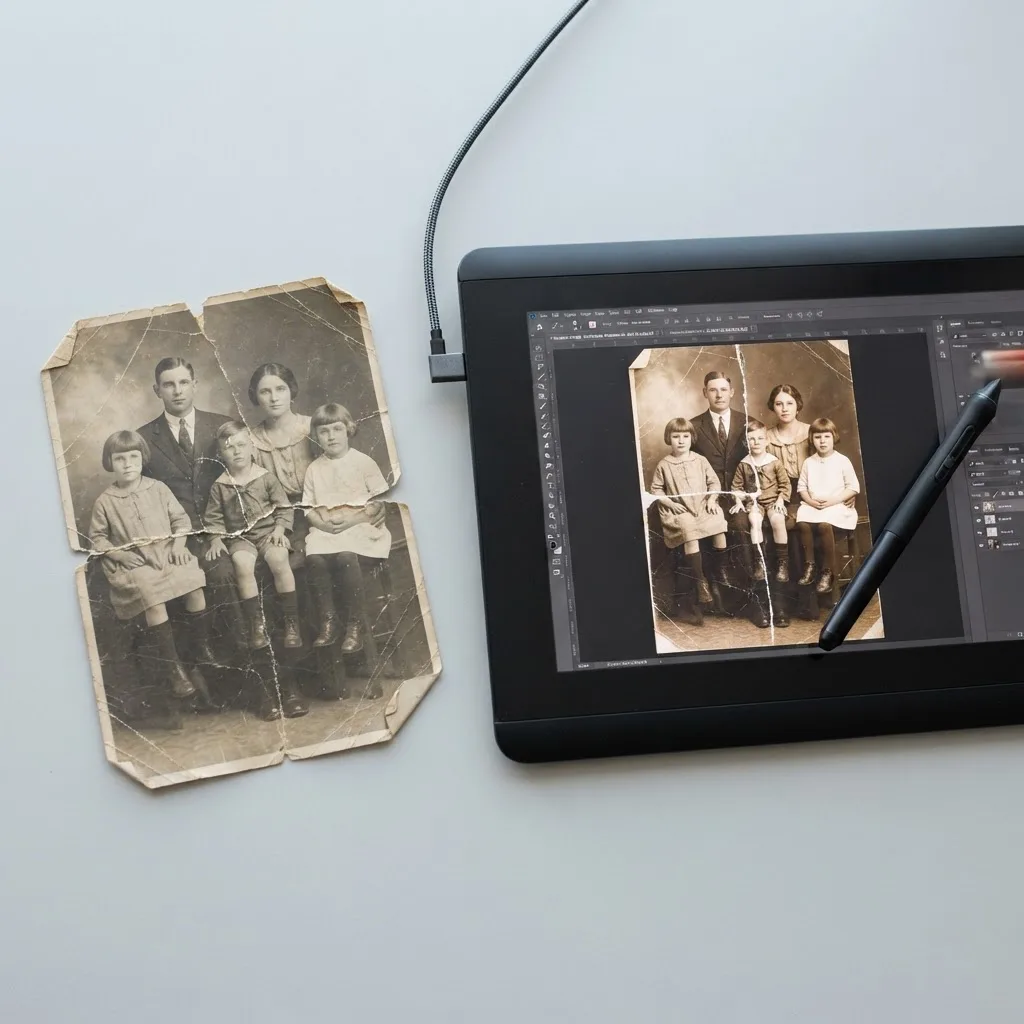
Old photo restoration
Hand retouching for tears, fading, stains, and missing areas, with full before-and-after review.
Canyon Iris digitizes, restores, and analyzes photographs and albums — pairing high-resolution scanning with material radiography so every restoration stays true to the original print.

Founded by imaging specialists and conservators, Canyon Iris treats every photograph as a unique object. We combine high-resolution digitization with material analysis to understand exactly how a print was made before we restore it — so the result stays true to the original.

Archival-grade scanning of prints, negatives, and slides at resolutions suited for both viewing and long-term storage.

Repair of tears, fading, mold damage, and missing sections with careful color and tone reconstruction.

Non-invasive X-ray and infrared imaging to examine paper, emulsion, and underlying structure before treatment.

Full album digitization page by page, preserving layout, captions, and the original sequence of images.

Fine art and archival printing of restored images on museum-grade paper and traditional photographic media.

Structured digital delivery and backup planning so your collection stays accessible for generations.
We log condition, material, and damage for every item, including radiographic checks where needed.
High-resolution scanning captures the current state of the photograph before any work begins.
Specialists repair damage and rebuild lost detail by hand, referencing the original material.
You receive digital files, and optionally new prints or a rebuilt album, ready for safekeeping.

High-resolution scanning of individual prints and negatives, delivered as archival digital files.
Hand retouching for tears, fading, stains, and missing areas, with full before-and-after review.
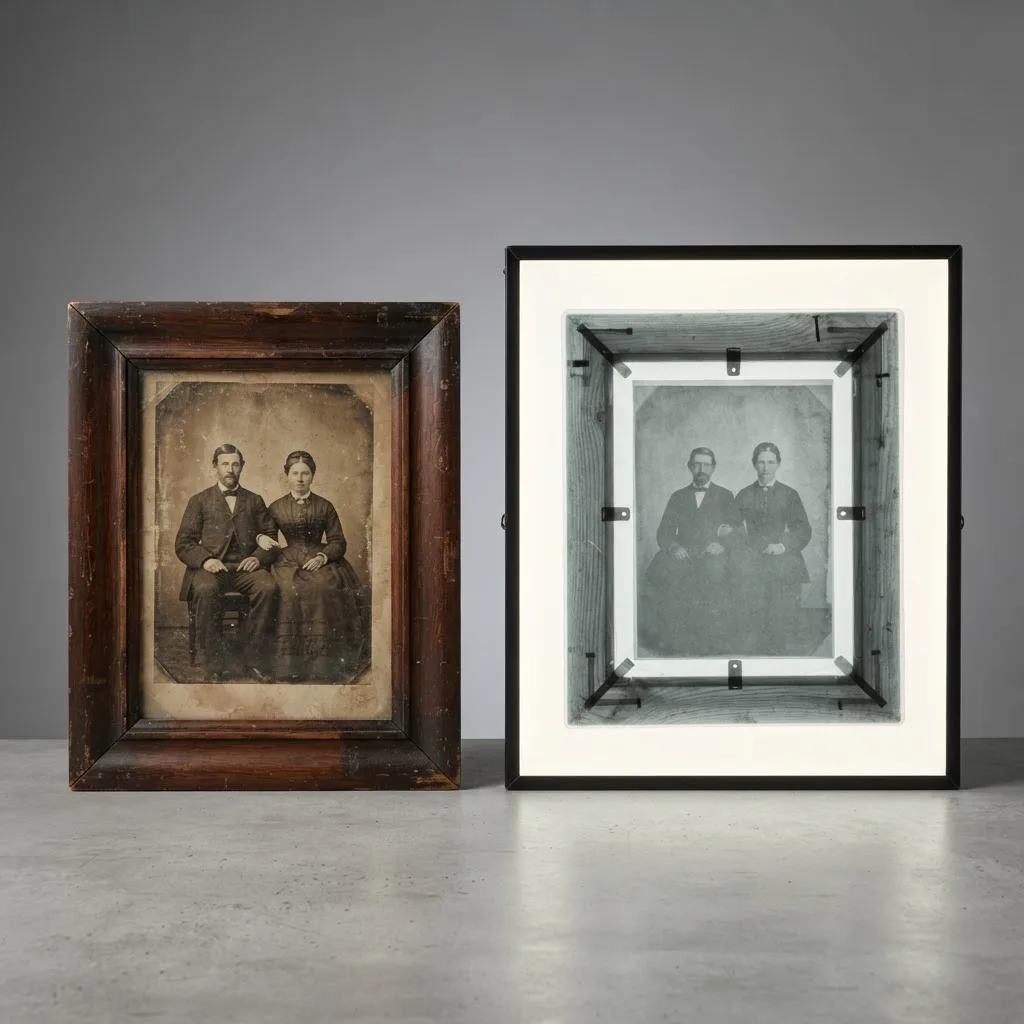
X-ray and infrared imaging to assess structure, prior repairs, and hidden layers before treatment.
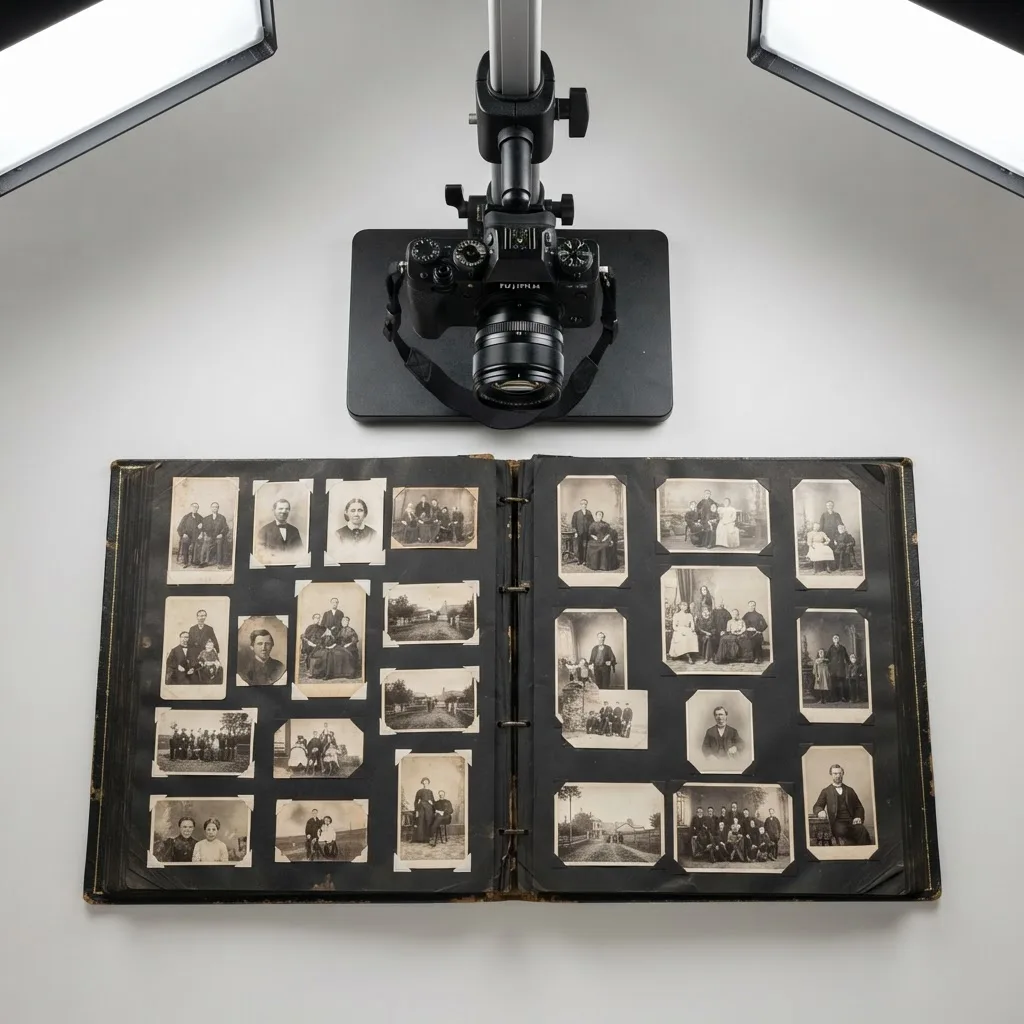
Complete album digitization preserving page layout, captions, and original photo sequence.
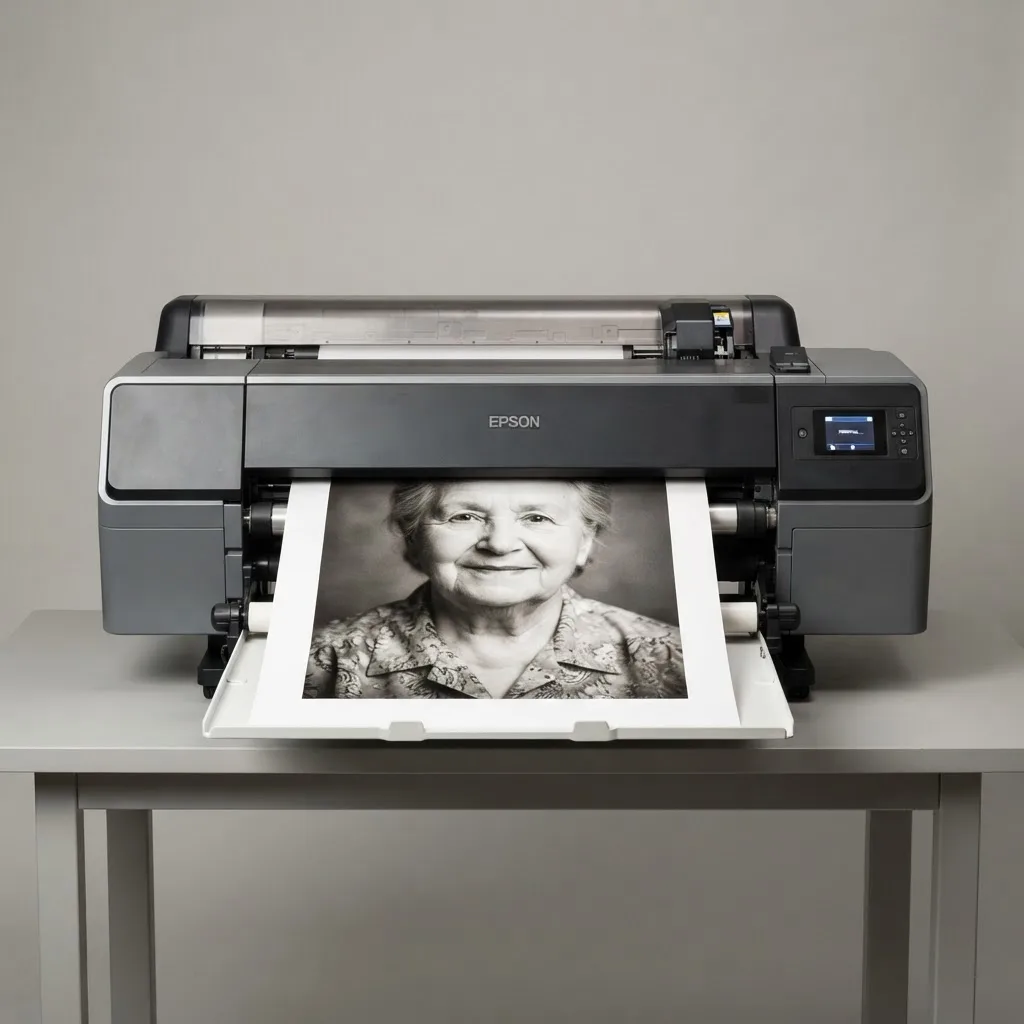
Archival fine art prints of your restored photographs on museum-grade or traditional photo paper.

Organized delivery of your full collection with backup copies and a searchable digital index.
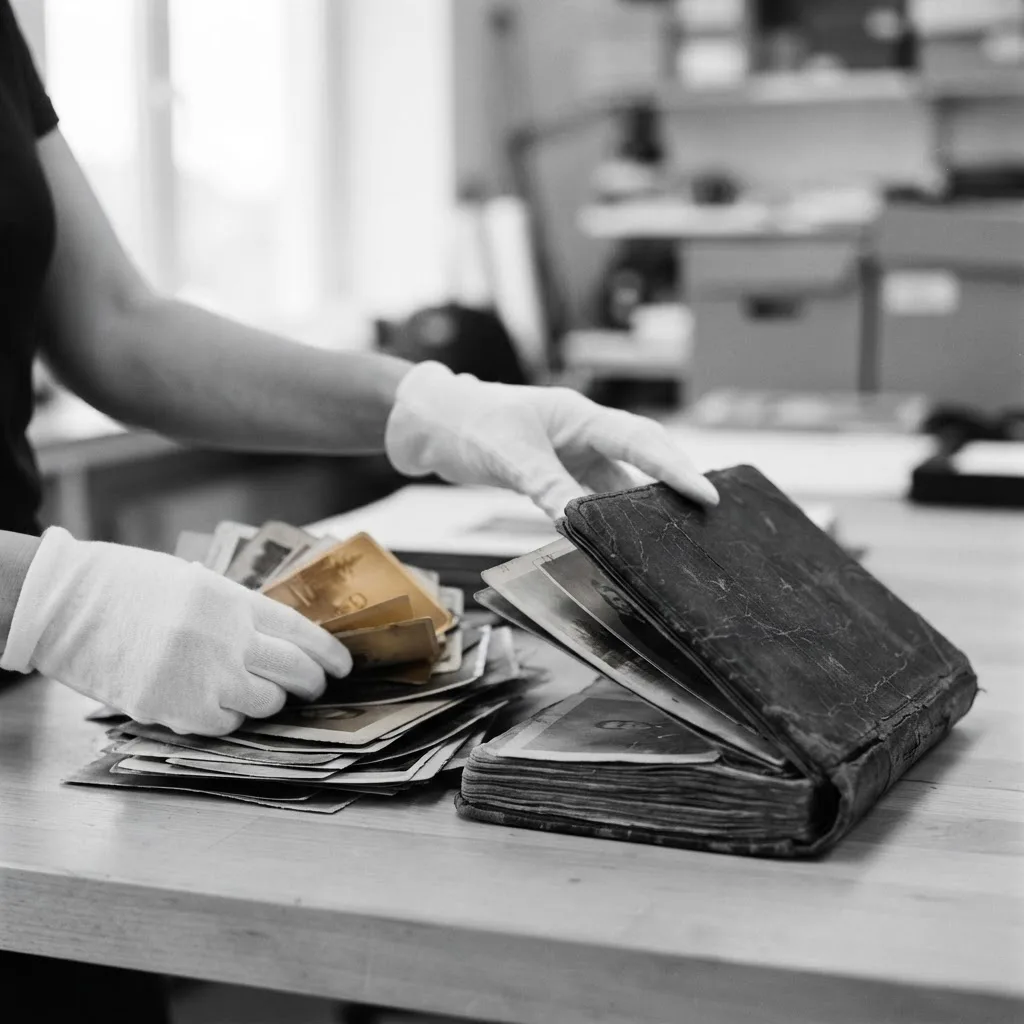
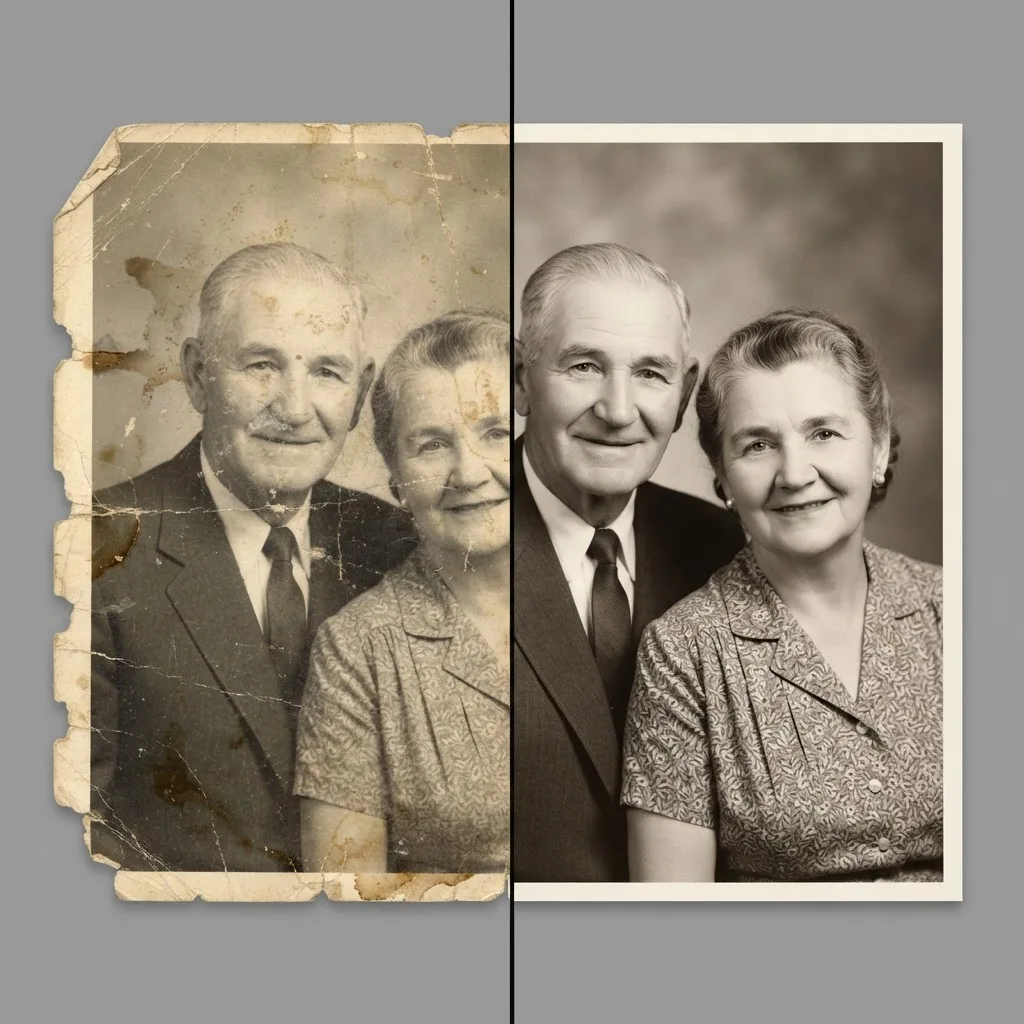
A client brought us a severely water-stained wedding portrait from 1958. Radiographic imaging revealed the original tonal structure beneath the staining, which our team used to guide a full manual restoration — recovering facial detail, fabric texture, and background that appeared permanently lost.
Read more about our approach“They recovered photographs of my grandparents that I thought were unusable. The detail in the final scans was remarkable.”— H. Nakamura, Tokyo
“The radiography step gave us real insight into how the original print was made before any restoration began. Very thorough.”— Local history society, Chuo-ku
“Our entire family album was scanned and organized in weeks. Clear pricing and careful handling throughout.”— S. Yamada, Yokohama
Most single-photograph restorations take one to two weeks. Full album projects and radiography-assisted treatments are scheduled individually depending on volume and condition.
Yes. Originals are returned to you along with the digitized and restored files. We never retain physical materials longer than required for the project.
Radiography lets us see beneath the surface of a print — prior repairs, structural damage, or layering — so restoration decisions are based on evidence rather than guesswork.
Yes, we digitize albums page by page, preserving the original layout and any captions, and can rebuild a matching printed album afterward if requested.
Yes, we offer archival fine art printing on museum-grade and traditional photographic paper for any restored image.
For a handful of treasured prints.
Our most requested package.
For museums, societies, and studios.

How X-ray imaging helps us understand paper and emulsion layers before treatment begins.

Practical steps to take before bringing a fragile album in for professional digitization.

Why paper choice matters as much as the restoration itself for long-term print stability.


